

The Defining Public Health Challenge of Our Time
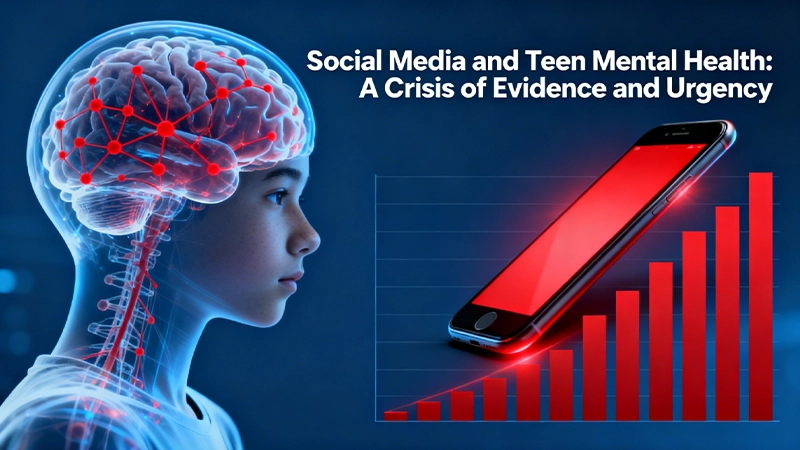
America is in the throes of a youth mental health crisis, and social media has emerged as a pivotal, yet poorly understood, contributor. “This is the defining public health challenge of our time,” experts warn, noting that platforms like Facebook, Instagram, and TikTok exert undeniable influence on teens—but the extent of their harm remains fiercely debated.
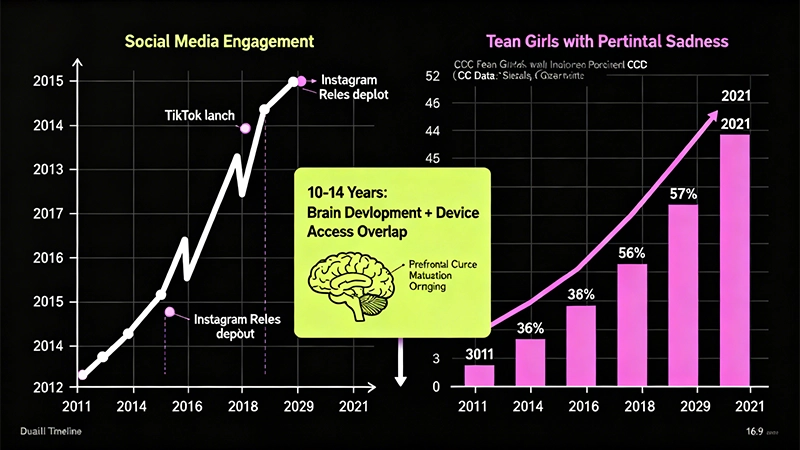
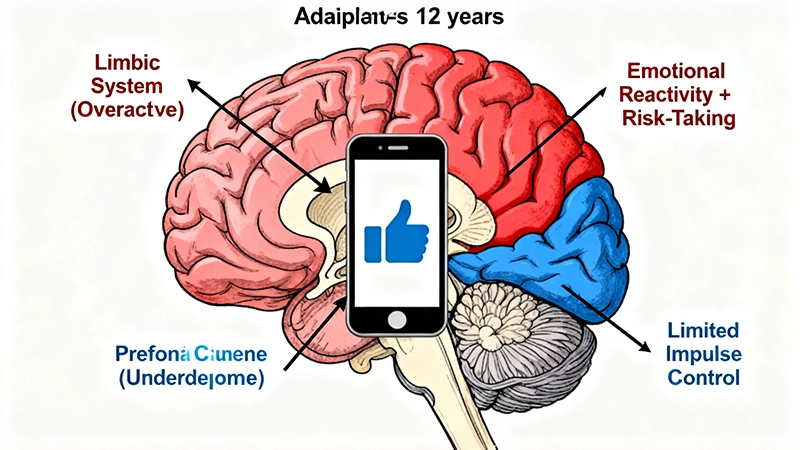
The timing of two trends fuels concern: as social media became “super engaging” in the 2010s, teen depression rates surged. A CDC study tracking 2011 to 2021 found the percentage of teen girls reporting persistent sadness or hopelessness jumped nearly 60% —coinciding with the era when platforms optimized for constant engagement. For 10- to 14-year-olds, this overlap is particularly dangerous: puberty marks the second most critical period of brain reorganization, and devices “make their brain react in unexpected and dramatic ways” just as their minds are maturing.
Causality vs. Urgency: The Science Gap
Scientists caution against conflating correlation with causation. “Two things happening simultaneously are not causally related,” they emphasize. Yet waiting for definitive proof carries steep costs: “The time science takes will lose an entire generation or two.” Complicating research are “network effects”—my Facebook use impacts my friends—making controlled experiments nearly impossible.
Conflicting studies highlight the confusion. A recent University of Oxford study found no link between individual Facebook data and poor well-being—but it excluded Instagram, whose user base skews younger . This gap matters: teens aged 10–14, the group most vulnerable to brain changes, are heavy users of platforms like Instagram and TikTok, not just Facebook.
The Data Access Crisis
Worsening the uncertainty is a 2023 crackdown on platform transparency. Companies have “mass closed databases and APIs” (application programming interfaces) that once let academics study user behavior. Reddit now charges for API access, while X (formerly Twitter) has shut down most access . “The state of data sharing is worse than in 2021,” researchers report—crippling efforts to measure harm in real time.
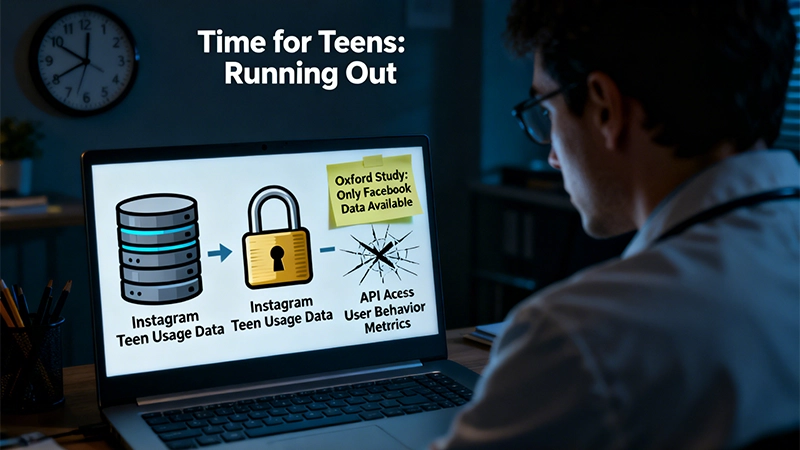
Experts urge legislative action: “We need laws to make data access easier and more robust.” Without it, understanding social media’s true impact—good or bad—remains elusive.
Industry Response and the Path Forward
Platforms like Meta (Facebook/Instagram), Google (YouTube), and TikTok stress their commitment to teen safety, citing content restrictions and well-being safeguards . Yet experts remain skeptical. “Even if social media was good for most people, it seems bad for teenagers 10–14,” one concludes.
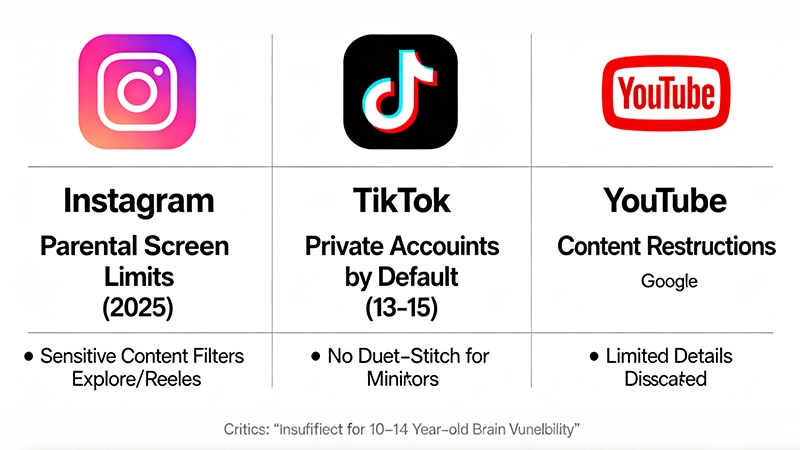
The crisis demands action, not just research. “We have to pay attention and act immediately,” advocates insist. For a generation growing up online, the clock to balance innovation with protection is already ticking.