
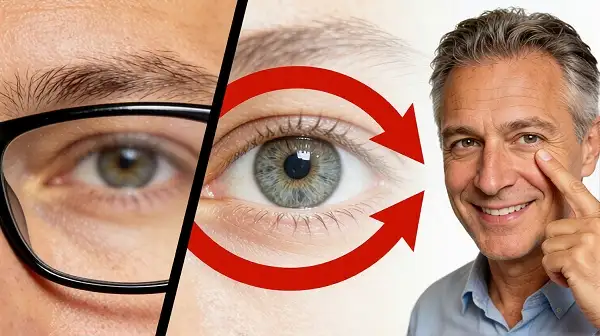

If you’ve spent years staring at computer screens, squinting to read menus, or relying on glasses for daily life—you’re not alone. Declining eyesight, dry eyes, cataracts, and age-related macular degeneration (AMD) affect millions of people, with those over 50 being particularly vulnerable. The good news? Many vision issues stem from modifiable factors, and science-backed natural remedies can help repair and protect eye health. This article will analyze the root causes of vision loss and share practical methods to reverse damage and enhance eye function.
1. The Science Behind Vision Decline in People Over 50
To improve declining eyesight, we first need to understand its root causes. The eyes rely on light-sensitive cells called “rods and cones” in the retina to convert light into signals for the brain. Cones—responsible for daylight vision, color perception, and fine details—are rich in mitochondria, the “energy factories” of cells. As we age (especially after 50), the number of mitochondria in the macula of the retina (the core area for clear vision) gradually decreases, leading to a series of issues:
- Reduced contrast sensitivity (difficulty seeing in low light or at night)
- Diminished color perception and fine detail vision
- Increased glare sensitivity (a safety hazard when driving in rain or fog)
- Higher risk of age-related macular degeneration, cataracts, and glaucoma
Other contributing factors include age-related hardening of the lens, high blood sugar (linked to diabetic retinopathy and cataracts), and prolonged screen time (causing eye muscle fatigue and dryness).
2. Natural Remedies to Reverse Declining Eyesight
Natural remedies are not a substitute for professional medical intervention but serve as auxiliary methods to improve eye function and slow down damage. The following methods have been scientifically proven effective for protecting vision in middle-aged and elderly people:
2.1 Eye Relaxation Exercises: Relieve Muscle Tension

Staring at close objects (such as screens and books) for a long time causes continuous contraction of the ciliary muscles, accelerating vision decline. Practicing 10-15 minutes of eye relaxation exercises daily can effectively soothe eye muscles:
- Near-Far Alternating Exercise: First focus on an object 5 meters away for 20 seconds, then switch to an object 30 centimeters away for 20 seconds, repeating 10 times to help restore the elasticity of the ciliary muscles.
- Blinking Exercise: Intentionally blink 15-20 times per minute (only 5-7 times normally), especially when using screens, to relieve dry eyes and keep the eyeballs moist.
- Periocular Massage: Gently press the temples and acupoints under the eye sockets with the pads of your index fingers, massaging 10 times clockwise to promote blood circulation around the eyes.
2.2 Natural Teas and Foods: Supplement Eye Nutrition
Some natural foods are rich in antioxidants, which can reduce oxidative damage to the retina and assist in improving vision:
- Wolfberry and Chrysanthemum Tea: Wolfberry contains zeaxanthin and lutein, while chrysanthemum clears the liver and improves eyesight. Drink one cup daily (10g wolfberry + 5g chrysanthemum) brewed in boiling water to relieve dry eyes and eye fatigue.
- Blueberries and Blackcurrants: Rich in anthocyanins, they enhance the light-sensing ability of the retina. Eating about 50g daily can improve night vision.
- Carrots and Spinach: Beta-carotene in carrots can be converted into vitamin A, and spinach contains lutein—both protect the retina and reduce the risk of macular degeneration.
2.3 Hot Compress and Steam Therapy: Improve Eye Circulation
Middle-aged and elderly people have reduced tear secretion, making them prone to dry eyes. Hot compresses can promote tear gland secretion and relax periocular muscles: Apply a hot towel (around 40℃) to the eyes for 10 minutes daily, or use an eye steamer 3-4 times a week. This effectively relieves dryness, irritation, and eye fatigue, especially suitable for those who use electronic devices for a long time.
3. Key Nutrients for Eye Health
Maintaining eye function requires specific nutrients. People over 50 should focus on supplementing the following components through diet or legal supplements:
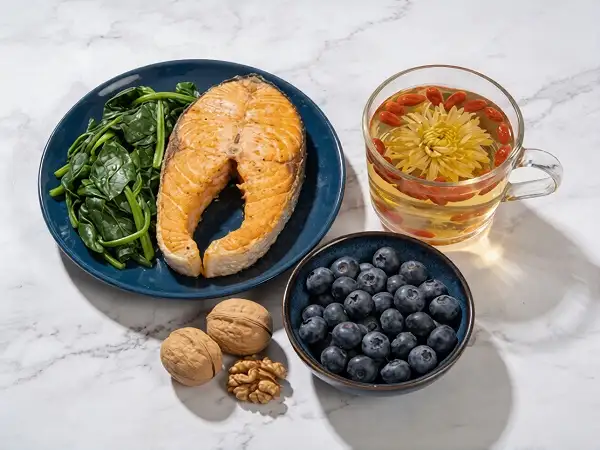
- Lutein and Zeaxanthin: Mainly present in the macular area of the retina, they filter blue light and reduce oxidative damage. Found in spinach, kale, and egg yolks, the recommended daily intake is 10mg.
- Vitamins A, C, and E: Vitamin A prevents night blindness; vitamins C and E are antioxidants that protect eye tissues. Obtain them from oranges, kiwis, nuts, and animal livers.
- Omega-3 Fatty Acids: Relieve dry eyes and promote retinal health. Found in deep-sea fish (salmon, cod), flaxseeds, and walnuts, the recommended daily intake is 250-500mg.
- Zinc: Participates in the synthesis of retinal photoreceptor cells and enhances vision. Supplement through oysters, lean meat, and pumpkin seeds, with a recommended daily intake of 11mg (males) and 8mg (females).
4. Daily Habits to Protect Your Eyes
The core of eye protection is “prevention first.” Developing the following daily habits can effectively slow down vision decline:
4.1 Control Electronic Device Usage Time
Follow the “20-20-20” rule: Every 20 minutes of screen time, look up at an object 20 feet (about 6 meters) away for 20 seconds. Also, reduce electronic device use 1 hour before bedtime to avoid blue light inhibiting melatonin secretion, which protects vision and improves sleep quality.
4.2 Optimize the Eye-Using Environment
Maintain adequate natural light or soft lighting when reading or using computers, avoiding direct glare on the eyes. Keep a distance of 50-70 centimeters between the screen and your eyes, with your line of sight tilted slightly downward by 15-20° to reduce eye muscle strain. Maintain appropriate indoor humidity (40%-60%) to alleviate dry eyes.
4.3 Regular Eye Examinations
People over 50 are advised to undergo a comprehensive eye examination annually, including vision tests, intraocular pressure measurements, and retinal examinations. Early detection of issues such as macular degeneration and glaucoma allows for timely intervention and treatment, preventing irreversible vision damage.
4.4 Moderate Exercise and Blood Sugar Control
Engage in gentle exercises such as brisk walking or tai chi 3 times a week to promote overall blood circulation, providing sufficient oxygen and nutrients to the eyes. Control blood sugar and blood pressure to avoid diabetic retinopathy caused by high blood sugar and eye blood vessel damage from high blood pressure.
5. FAQs About Vision Restoration
Q1: Can natural remedies completely cure cataracts and glaucoma?
No. Cataracts require surgical replacement of the artificial lens, and glaucoma requires medication or surgery to control intraocular pressure as prescribed by a doctor. Natural remedies can only assist in relieving symptoms and slowing disease progression, and cannot replace professional medical treatment.
Q2: Can people over 50 restore their eyesight to a young state after decline?
In most cases, improvement is possible but full restoration to a young state is difficult. Reversible issues such as ciliary muscle fatigue and dry eyes can be significantly relieved through training and care. However, for irreversible changes such as retinal damage and lens aging, the focus is on controlling damage progression and maintaining existing vision.
Q3: What should be noted when supplementing nutrients?
Avoid excessive supplementation—for example, excessive vitamin A may cause poisoning. People with underlying diseases (such as diabetes and kidney disease) should consult a doctor before supplementation to avoid conflicts with medications. Prioritize intake through natural diets, with supplements only used to compensate for dietary deficiencies.
Conclusion
Declining eyesight in people over 50 is not irreversible. Through scientific natural remedies, balanced nutrition, and good eye-using habits, you can not only relieve existing discomfort but also effectively slow down vision decline. Remember: Eye health requires long-term maintenance. If you experience sudden vision loss, distorted vision, eye pain, or other symptoms, seek medical attention immediately—do not rely on natural remedies and delay treatment. May every middle-aged and elderly person protect their clear vision and enjoy a high-quality life.



Jshsbbs