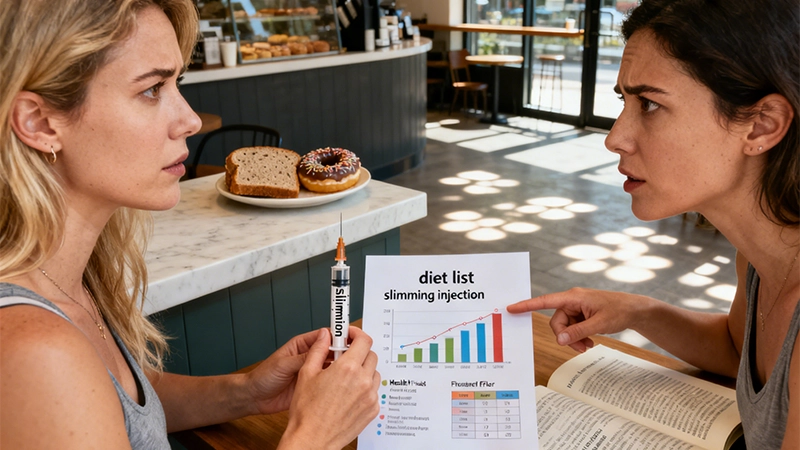

Drugs like Ozempic (originally an insulin regulator, later discovered to have significant weight loss benefits, earning them the nickname “slimming shot”) have helped many people shed previously intractable weight. Could an over-the-counter diet achieve the same results?
In recent years, the emergence of weight loss drugs, including Ozempic and Wegovy, has revolutionized the medical world.
Glucagon-like peptide-1 (GLP-1) agonists have been shown to effectively help obese individuals lose weight by reducing their appetite and thus eating less. But beyond the hype, some claim that these drugs’ effects can be easily mimicked through diets.
For example, there’s a trend on social media suggesting that drinking a drink made from oats, water, and lime juice—nicknamed “oatzempic”—can suppress appetite and help people lose weight in the same way.
But can any diet or single food or drink truly achieve the same results as Pantozen? And does the Oatmeal Pantozen diet really work?
What are GLP-1 weight loss pills?
The new generation of weight loss drugs mimics a process that occurs naturally in our bodies every day. When we eat, our intestines produce the hormone GLP-1, which increases insulin levels in the blood, reduces sugar production in the liver, slows digestion, and reduces appetite.
Chris Damman, a gastroenterologist and clinical associate professor at the University of Washington, says the GLP-1 hormone is a “master regulator” of the body’s entire metabolic process.
“These pathways are very delicate and involve many different hormones,” he says.

Some people choose to take medications like Panadol to make weight loss easier.
Can the effects of GLP-1 be mimicked through diet?
Two key elements of our diet that are linked to GLP-1 are fiber and polyphenols.
“Fiber is the preferred food for the trillions of bacteria in our gut,” says Mary Sco, a resident physician and nutrition writer in Virginia.
When we consume foods rich in fiber and polyphenols, these compounds are converted by our gut microbiota into short-chain fatty acids, which stimulate GLP-1 production. Fiber-rich foods include nuts, legumes, fruits, and vegetables, while fruits, vegetables, and nuts also contain polyphenols.
This process begins before food even reaches the intestines. Research suggests that the bitter taste of polyphenol-rich foods triggers our taste receptors to send signals to the intestines, triggering the production of digestive hormones, including GLP-1.
Sco says that naturally increasing GLP-1 levels depends not only on what we eat but also on how we eat.
“Emerging research suggests that the order in which we eat may also be important,” she says.
In a 2020 review, researchers wrote that some studies suggest that consuming high-protein foods (such as meat, eggs, and vegetables) before carbohydrates increases GLP-1 levels more than consuming carbohydrates first. However, they note that the mechanism behind this is currently unclear.

Scientists say these drugs take advantage of some basic substances in our system that mimic what we get from eating fiber-rich foods.
The time of day we eat may also affect the amount of GLP-1 our bodies produce. Some studies suggest that our bodies produce more GLP-1 when we eat in the early morning compared to later in the evening.
Researchers wrote in a 2023 paper that this effect is related to the natural fluctuations in our hormone levels throughout the day, and eating in the early morning helps maintain our circadian rhythm.
It makes sense, then, that a diet rich in fiber, polyphenols, and monounsaturated fats would ensure we produce plenty of GLP-1. However, Damman says that the modern Western diet currently lacks the elements that maximize GLP-1 production.
“These weight loss drugs are exploiting some fundamental mechanisms in our satiety mechanisms that are disrupted by modern ultra-processed foods,” he says.
Which is more effective, medication or diet?
Damman believes that while a balanced diet and an active lifestyle are sufficient for weight loss for some people, for others, GLP-1 agonists are necessary.
“Ultimately, it comes down to changing behavior, which is extremely difficult. This is why lifestyle changes often don’t work for people in metabolic distress, while these medications can be very helpful for morbidly obese patients with co-morbidities.”
Ultimately, a diet rich in whole foods, including fruits, vegetables, legumes, and nuts, that promotes natural GLP-1 production can be effective for controlling appetite, according to Scho.
For others, a diet rich in fiber, polyphenols, and monounsaturated fats may be an effective way to control appetite, Scho said.
“Some people might not see as much benefit, but they’ll still get some benefit. These rules apply to everyone because it’s basic human biology—we all get the ‘stop eating’ signal.”
Darman says that the diet that boosts natural GLP-1 production comes almost entirely from archetypal foods, including fruits, vegetables, legumes, and nuts. The irony of discovering this by trying to mimic the effects of diet pills is familiar to some nutrition scientists, including Damman.
“The journey has come full circle,” he says. “Everything leads back to eating archetypal foods—there’s no substitute for them.”
The future of GLP-1 research
Dammann said that while we know prescription GLP-1 agonists are generally considered safe, there’s still much we don’t know about them.
Gary Schwartz, professor of medicine, neuroscience, and psychiatry and behavioral sciences at Albert Einstein College of Medicine in New York City, said weight-loss medications are giving way to an emerging field of research that may help better understand how to treat obesity.
The reasons for rising obesity rates in many parts of the world are numerous and complex, but many researchers agree that our dietary environment and modern lifestyles are among the driving forces.
Schwartz says our food environment has only recently become a threat to human life, thanks to high-sugar, high-fat, ultra-processed foods that maximize the use of food components we naturally enjoy.
When we consume these foods, reward areas in the brain are activated by dopamine, which leads us to overeat. This, Schwartz says, reduces our sensitivity to these components over time, so we must consume more and more food to achieve the same level of sensory satisfaction.
But Schwartz says recent data suggests that these medications, in addition to potential side effects like nausea and other gastrointestinal symptoms, can also reduce people’s appetite for these delicious foods.
“These findings suggest that there might be a mechanism we could exploit to restore healthy eating without medication by limiting the sense of reward and achieving satisfaction without overeating.”
Schwartz says researchers could observe brain activity and behavior during eating, weight loss, and weight regain to see if any diet and exercise interventions could produce similar effects.
“It will take clinical or dietary trials that combine imaging and maintenance weight loss, but within a decade, people will understand some of the hot spots in the brain and how to target them through behavior or diet,” Schwartz said.