
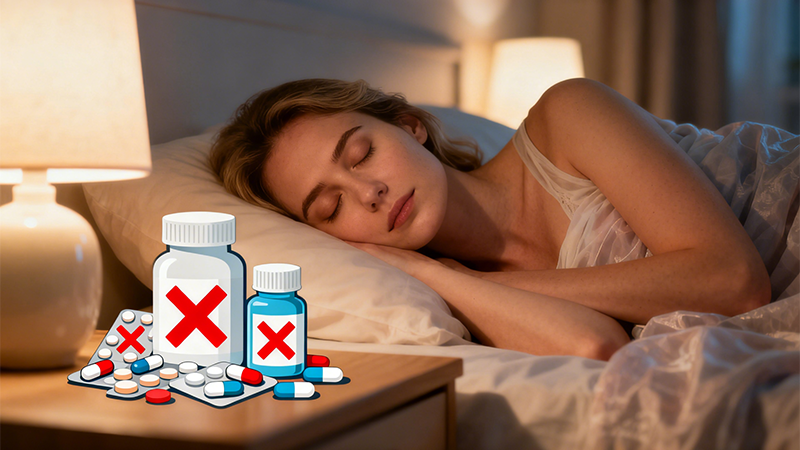

Do you struggle to fall asleep and often rely on sleeping pills? What you may not know is that sleeping pills come with a hidden risk—they rob you of deep sleep. Studies from Taiwan’s database show a terrifying link: taking 1 sleeping pill doubles your risk of dementia, 2 pills triple it, and 3 pills increase it by 5 times. But there’s good news: renowned neurologist Dr. Fang Shih-chin, who specializes in sleep disorders at Yonghe’s Gengshen Hospital, has shared simple, drug-free methods to help you fall asleep in just 5 minutes. These strategies are tailored to different groups, especially middle – aged people and the elderly. Let’s explore these life – changing tips.
Tailored Sleep Solutions for the Elderly: Master the “Two – Beat” Rhythm
For the elderly, sleep problems often stem from a disrupted day – night cycle. Dr. Fang emphasizes that the key is to align with the Earth’s natural rhythm, which he calls the “two – beat” rhythm—one beat for the day and one for the night.
Beat 1: Daytime Light Exposure and Gentle Activity
The first step is to get enough sunlight during the day. Indoor lights only provide a few hundred Lux, but even on cloudy days, outdoor light can reach several thousand Lux. This strong light is like pressing the “start” button on your 24 – hour internal clock.
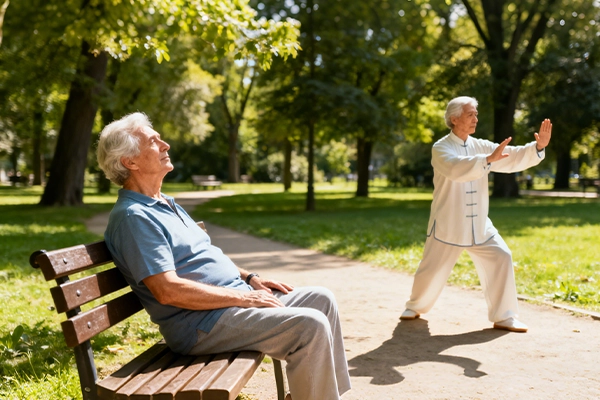
- Morning Light: Get outside for at least 30 minutes around 7 or 8 a.m. This exposure wakes up your body and sets a healthy sleep – wake cycle.
- Evening Light: Many elderly people tend to go to bed too early (around 7 or 8 p.m.) and then wake up in the middle of the night. To prevent this, add another 30 minutes of light exposure in the evening.
If mobility is an issue, simply sitting on a park bench or at the doorway to soak up the sun works. For those who can move around, a short walk is even better. And for those with limited mobility, there’s a simple exercise called “Ping Shuai Gong” (Flat Swinging Exercise), promoted by Master Li Fengshan of Meimen. It’s like “walking with your hands”—stand with feet shoulder – width apart, swing your arms flat, and coordinate with your breath. You can even add a slight knee bend every 4 swings. Do this for 10 – 15 minutes a day, and it can also be done while sitting if standing is difficult.
Beat 2: Nighttime Darkness and Cool Temperature
At night, your body needs darkness and a cool environment to trigger sleep.
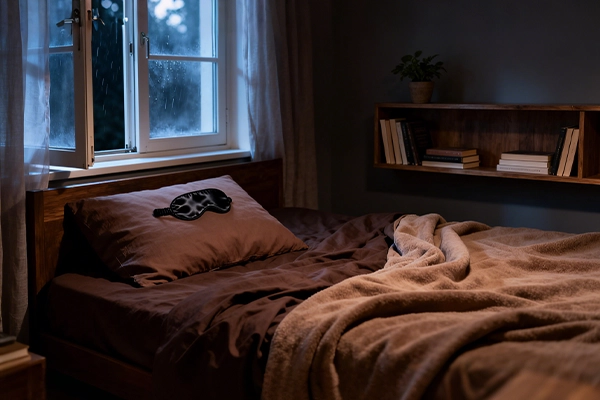
- Darkness: Melatonin, the sleep hormone, only works effectively in complete darkness. So, ditch the nightlight and wear an eye mask. Take it off only when you need to use the bathroom and put it back on immediately afterward.
- Cool Temperature: When you sleep, your body temperature drops—this is a natural signal for your brain to rest. In hot summer months, don’t skimp on the air conditioning or open a window to keep the room cool. A comfortable, cool space makes it much easier to fall and stay asleep.
Sleep Strategies for Middle – Aged Adults: The “Four – Beat” Routine
Middle – aged people (aged 40 – 65) have busy work and life schedules, so Dr. Fang suggests a “four – beat” routine to balance productivity and sleep.
Beat 1: Morning Brain Work
Your brain is at its best in the morning, with high levels of stress hormones that boost focus. Use this time for complex tasks, decision – making, and creative work.
Beat 2: Afternoon “Chill Time”
By noon, stress hormone levels drop, and you may feel a slump. Instead of pushing through difficult work, do simple, low – brainpower tasks: browse the internet, watch cute cat videos, plan dinner, or chat with friends on LINE. Think of it as “chilling out” to recharge.
Beat 3: Evening Feast (in Moderation)
Dr. Fang’s “lazy weight loss and longevity method” involves light eating during the day (a few nuts or an egg for lunch) and a full, satisfying dinner. Eat slowly—you can even take up to 3 hours! Here’s the science: when you eat a full meal with some dessert at night, the sugar triggers your “orexin cells” (a type of brain cell). These cells are sensitive to sugar, and when activated, they signal your brain to rest. Just make sure to eat 70% full to avoid digestive issues.
Studies on mice have shown that eating one 70% full meal a day can increase lifespan by 35%—mice that usually live 30 months lived up to 50 months with this diet!
Beat 4: Nighttime Image – Based “Attack” for Sleep
Even with the first three beats, you might still struggle to fall asleep at night. That’s where the “image – based attack” method comes in.
Your brain uses different “modes”: the front brain (for language, logic, and daytime thinking) and the back brain (for images, dreams, and nighttime processing). At night, the back brain takes over—so stop talking to yourself (even mentally!) and start visualizing.
- If you’re stressed or worried: Turn those worries into images. Instead of ruminating on “I’m stressed about work,” picture your work desk or the project you’re working on.
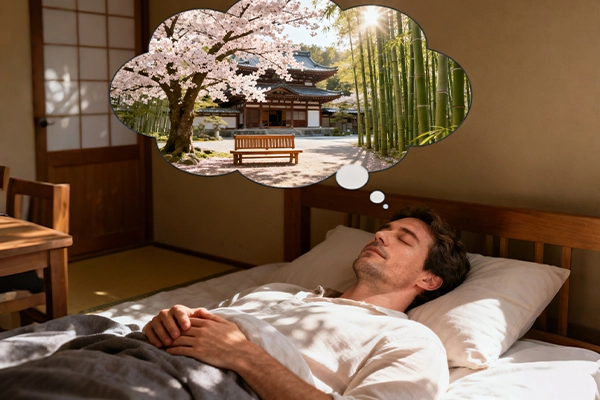
- If your mind is empty but you can’t sleep: Think of happy memories, like a trip to Japan—visualize a temple, cherry blossom trees, and a small path. Don’t add subtitles or edit the scene; just let it play naturally like a movie.
Do this for 5 minutes. If your mind wanders (you “zone out”), take a short break and try another image. This active, image – based approach helps your brain switch to nighttime mode and fall asleep quickly.
Bonus: Solving Common Nighttime Sleep Disruptions
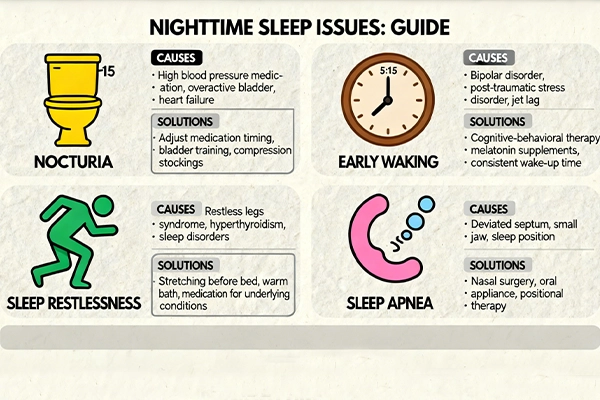
Many people struggle with nighttime issues that ruin sleep—nocturia (frequent nighttime urination), restlessness, itching, and pain. Dr. Fang breaks down the causes and solutions:
| Nighttime Issue | Cause | Solution |
| Nocturia | Decreased anti – diuretic hormone (ADH) with age (ADH helps the body retain water at night) | Consult a doctor about low – dose ADH medication |
| Restlessness (e.g., tossing, acid reflux, leg discomfort, cramps) | Low dopamine levels | Ensure adequate serotonin and dopamine levels (talk to a doctor about supplements or lifestyle changes) |
| Nighttime Itching (nose, eyes, skin) | High histamine levels at night | Take first – generation antihistamines (they help you sleep and reduce itching—avoid third – generation ones that don’t cause drowsiness) |
| Nighttime Pain | Pain feels worse at night (no movement to distract from it) | Use calcium channel blockers to break the pain cycle (they help with both sleep and pain) |
The Science of Sleep: Why Deep Sleep and Dreams Matter
Sleep isn’t just about “resting”—it’s a vital process for your brain and body. Dr. Fang explains that sleep has two key components:
- Deep Sleep (1/4 of sleep time): This is when your brain “cleans itself.” When you’re in deep sleep, your brain cools down, and blood flow to the brain decreases. This creates gaps around blood vessels, allowing cerebrospinal fluid to flow in and flush out “waste proteins”—preventing dementia and brain degeneration.
- Dreams (1/4 of sleep time): Dreams are like a “screen saver” for your brain. While you dream, your brain is actually working hard (using 120% more energy than during the day!) to organize daytime memories and even “heal” emotional wounds. Deep sleep gives you the energy to have meaningful dreams—some even help you process past trauma or worries.
Sleeping pills disrupt this balance: they reduce both deep sleep and dreams, leaving you feeling tired even after 8 – 9 hours of sleep. That’s why Dr. Fang’s drug – free methods are so valuable—they help you get the deep sleep and dreams your body needs.
Final Tips for Better Sleep
- For Menopausal Women: Morning brisk walking helps burn excess stress hormones (caused by decreased estrogen production), reducing hot flashes and insomnia.
- For Short Sleepers: If you wake up after 4 hours and can’t fall back asleep, stay in a dark room, put on your eye mask, and visualize your last dream or a happy memory. Avoid using your front brain (no planning or thinking!)—let your back brain take over.
- Optimal Sleep Time: Aim for 7 – 8 hours of sleep a night. Even “light sleep” counts—don’t dismiss it as “not real sleep.”
With these simple, science – backed methods, you can say goodbye to sleeping pills and hello to restful, rejuvenating sleep. Remember: sleep is a natural process—all you need to do is align with your body’s rhythm!



I love what I learned
Thank you for watching. Have a great day!
.