
For decades, women’s health and fitness advice has been rooted in research conducted on men—watered down, “shrunk and pinked” for female bodies, but rarely tailored to their unique biological needs. In a revealing conversation on the Mel Robbins Podcast, Dr. Stacy Sims, a globally recognized expert in women’s exercise physiology and nutrition science, dismantles this one-size-fits-all approach. With a PhD in exercise physiology, over 70 peer-reviewed papers, and a focus on women’s health across life stages, Dr. Sims argues that women’s bodies respond differently to diet, exercise, and stress—and that honoring these differences is key to unlocking energy, fat loss, and long-term health.
The “Shrink and Pink” Problem: Why Gender-Blind Fitness Fails Women
Walk into any sports store, and you’ll see the pattern: men’s running shoes scaled down, bicycles painted pink, and workout gear trimmed to fit smaller frames—yet no real adjustment for how women’s bodies function. Dr. Sims calls this “shrink and pink,” a industry-wide practice that treats women as “small men” rather than individuals with distinct physiological needs.
This oversight extends beyond products to fitness trends. Take fasted training, for example: a staple in male-centric fitness advice, where skipping food before exercise is hailed as a way to boost fat burn. For men, this might work—their bodies tap into amino acids and blood sugar reserves to power through workouts. For women, however, fasted training triggers stress. The female hypothalamus (a brain region regulating hunger and stress) is far more sensitive to low blood sugar; without pre-workout fuel, it responds by breaking down muscle for energy and holding onto fat—leaving women feeling tired, frustrated, and even “fluffier” after weeks of effort.
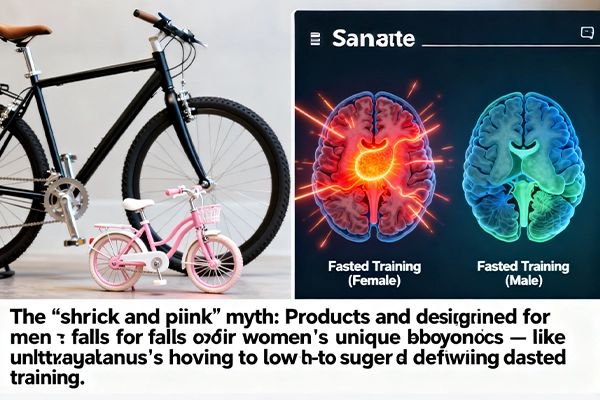
The ‘shrink and pink’ myth: Products and trends designed for men fail to account for women’s unique biology—like the hypothalamus’s sensitivity to low blood sugar during fasted training.
Morning Fuel: The Non-Negotiable Habit for Women’s Energy
If fasted training is a trap for women, what’s the solution? Dr. Sims’s answer is simple: eat something before moving your body in the morning. Even a small snack—like a protein coffee (espresso mixed with 30g of protein powder and almond milk), a half-banana, or a few tablespoons of yogurt—stabilizes blood sugar, calms stress hormones (like cortisol), and tells your brain, “We have the fuel to handle this workout.”
For women, this habit is transformative. Skipping morning fuel doesn’t just hinder workouts—it disrupts circadian rhythms (your body’s 24-hour clock). Women who break their fast by 8 a.m. (instead of waiting until noon or later) see better metabolic outcomes: improved sleep, reduced late-night awakenings from low blood sugar, and less visceral belly fat. In contrast, women who delay eating risk muscle loss, bone density decline, and elevated “bad” cholesterol—all in the name of “maximizing calorie burn.”
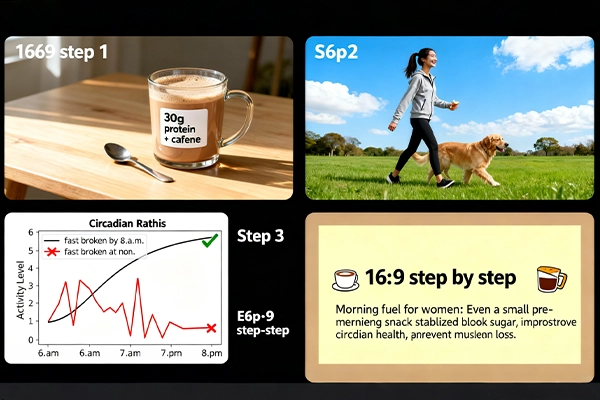
Morning fuel for women: Even a small pre-movement snack stabilizes blood sugar, improves circadian health, and prevents muscle loss.
Strength Training: Not Just for “Bulking”—for Brain, Bones, and Stress Resilience
When many women hear “strength training,” they picture bulky bodybuilders. Dr. Sims wants to change that. For women, strength training is not about aesthetics—it’s about survival. Starting at age 30, women lose muscle mass rapidly; by menopause, this loss accelerates, increasing risk of osteoporosis, cognitive decline, and insulin resistance.
The key to effective strength training for women? Ditch high reps with light weights (a holdover from 1980s aerobics) and focus on power-based training: 6–8 reps with heavy weights (heavy enough that you could eke out 2 more reps, but no more). Women’s muscles—rich in fat-burning, endurance-focused fibers—recover faster than men’s, so they need less rest between sets (2 minutes max, vs. 3 minutes for men). This approach builds lean muscle, strengthens bones, and boosts neuroplasticity—the brain’s ability to form new connections, reducing dementia risk.
Equally important: functional movements. Instead of crunches, try squats, deadlifts, or overhead presses—exercises that mimic real-life actions (carrying groceries, lifting kids) and engage your core naturally. For women, strong muscles mean better posture (our center of gravity sits lower, in the hips) and less “skinny fat” (thin outwardly, but low muscle and high visceral fat inwardly).
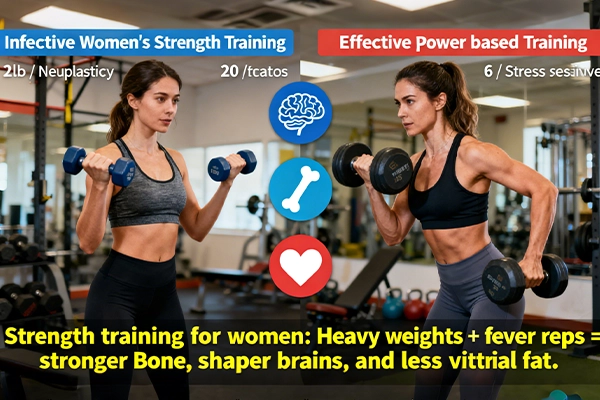
Strength training for women: Heavy weights + fewer reps = stronger bones, sharper brains, and less visceral fat.
Stress Resilience: Exercise as Medicine for Mind and Body
Dr. Sims’s most radical insight? Exercise isn’t just for weight loss—it’s a form of “positive stress” that trains your body to handle life’s chaos. In a world of sitting, screen time, and automatic garage doors, our bodies are starved for movement. This inactivity fuels obesity, depression, and anxiety—but exercise reverses it.
Even small, intentional movements work. A 30-second sprint interval (jumping lunges, kettlebell swings, or even fast walking up a hill) followed by 2 minutes of rest (repeat 2–5 times) triggers a cascade of benefits: improved insulin sensitivity, reduced belly fat, and better blood pressure. A walk in a green space? It lowers stress hormones and induces a “parasympathetic response”—the calm, restorative state your body needs to sleep and heal.
For women navigating caregiving, careers, and hormone changes, this stress resilience is life-changing. Regular exercise teaches your body to respond to stress (a tough meeting, a fussy kid) with calm, not panic. It’s why Dr. Sims calls exercise “your body’s reset button”—one that works with your biology, not against it.
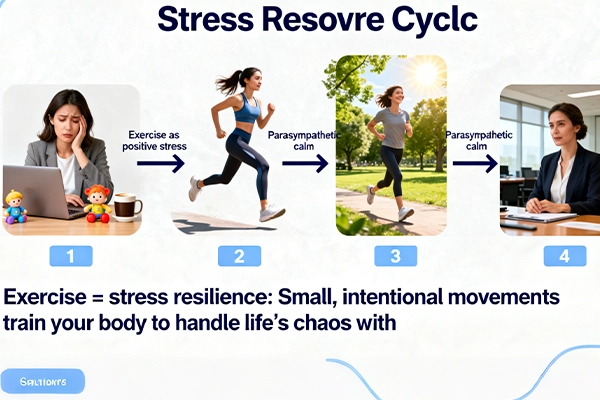
Exercise as positive stress” and “Parasympathetic calm.” Caption: “Exercise = stress resilience: Small, intentional movements train your body to handle life’s chaos with calm.
The Takeaway: Own Your Body, Ditch the “Small Man” Myth
At the heart of Dr. Sims’s advice is a simple mantra: Women are not small men. For too long, we’ve apologized for our bodies’ needs—skipping food to “burn more calories,” lifting light weights to avoid “bulking,” and following trends that weren’t built for us. It’s time to stop.
The solution isn’t complicated: Eat a small snack before morning movement. Lift heavy weights (yes, heavy!). Prioritize functional, joyful exercise. And most of all, give yourself permission to take up space—in the gym, in the research, and in your own life.
As Dr. Sims puts it: “Own this space. You deserve it.” For women, that space is one where health isn’t about shrinking—it’s about thriving.